Our Philosophy
The Leibniz-Humboldt-Akademie Südniedersachsen regards the cosmopolitan thinking of Gottfried Wilhelm Leibniz and Alexander von Humboldt—their global consciousness—as a forward-looking guiding principle in the era of today’s globalization. Our vision is a cross-border circulation of knowledge, in which we initiate and promote social, educational, and economic exchange processes between Germany and China. Guided by the intellectual legacy of Leibniz and Humboldt, we develop perspectives for sustainable transformation from a regional context in southern Lower Saxony, together with German and Chinese partners.
Gottfried Wilhelm Leibniz and Alexander von Humboldt belong to the great humanist thinkers of the world. Both universal scholars stand not only for tolerance, but also for the acceptance of the Other. As humanists, they respected human beings regardless of their country or cultural background. What they also shared was the ability to link insights from the humanities with those of cultural and natural sciences.
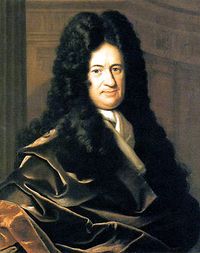
Gottfried Wilhelm Leibniz (1646–1716), the world-famous great German universal scholar, has stood since the 17th century for openness toward the cultures of the world. Throughout almost his entire life, he advocated the exchange of ideas and knowledge, especially between China and Europe. He called for respect toward everyone and commitment to the common good. His aim was, through mutual understanding and the promotion of human reason and justice, to bring about a harmonious, interdisciplinary coexistence of peoples.
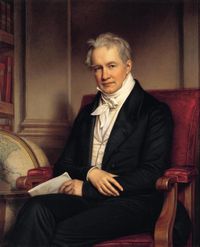
Alexander von Humboldt (1769–1859), the great polyglot scholar from Germany, understood the Earth as a unity, as a global network of interdependencies, exchanges, and flows of information. His joy in traveling to distant places and exploring the world was inseparable from his pursuit of research and knowledge. More than two centuries ago, A. v. Humboldt already recognized the human impact on nature and climate through deforestation and pollution from industrial centers. He thought and acted in a cosmopolitan, intercultural, and transdisciplinary way, and even today offers answers to contemporary problems: for the coexistence of different cultures, for the interactions between global circulation, world history, and worldviews, for ecology and economy, for nature and culture.
Our academy operates from southern Lower Saxony. Göttingen is the location of ANMENG GmbH, the parent company of the academy. We share regional and ethical ties with G. W. Leibniz and A. v. Humboldt.
Humboldt enrolled in 1789 at the Georg-August University in Göttingen, one of the most progressive universities in the world at the time, where he studied physics, zoology, geology, and geography. In Göttingen, the universal scholar gained foundational insights that became a lifelong basis for his groundbreaking research in volcanology, mining, meteorology, oceanography, botany, economics and agriculture, as well as ethnology and philosophy. His credo, which is also ours, was that knowledge gained should not be kept for oneself, but should be shared for the benefit of all.
Leibniz worked for 40 years only 100 km away from Göttingen as a court official and director of the Ducal Library in Hanover, now the capital of Lower Saxony, as well as in nearby Braunschweig and Wolfenbüttel. The philosopher, physicist, engineer, jurist, historian, theologian, linguist, and mathematician brought together and interconnected a wide range of disciplines. He became the inventor of infinitesimal and differential calculus and developed the binary system using the digits 0 and 1, which enables modern computer technology. He is regarded as the “architect of the modern digital age.” Leibniz himself said he was an “address office for China.” For almost his entire life, he devoted his attention without prejudice to an Asian country that appeared mysterious in Europe at the time, becoming a mediator of this distant culture. His forward-looking insight was: “China is the Europe of the East.”
Our task and path consist in not keeping knowledge from different fields to ourselves, but in exchanging it for the common good and thinking globally: from our location in southern Lower Saxony toward China.